
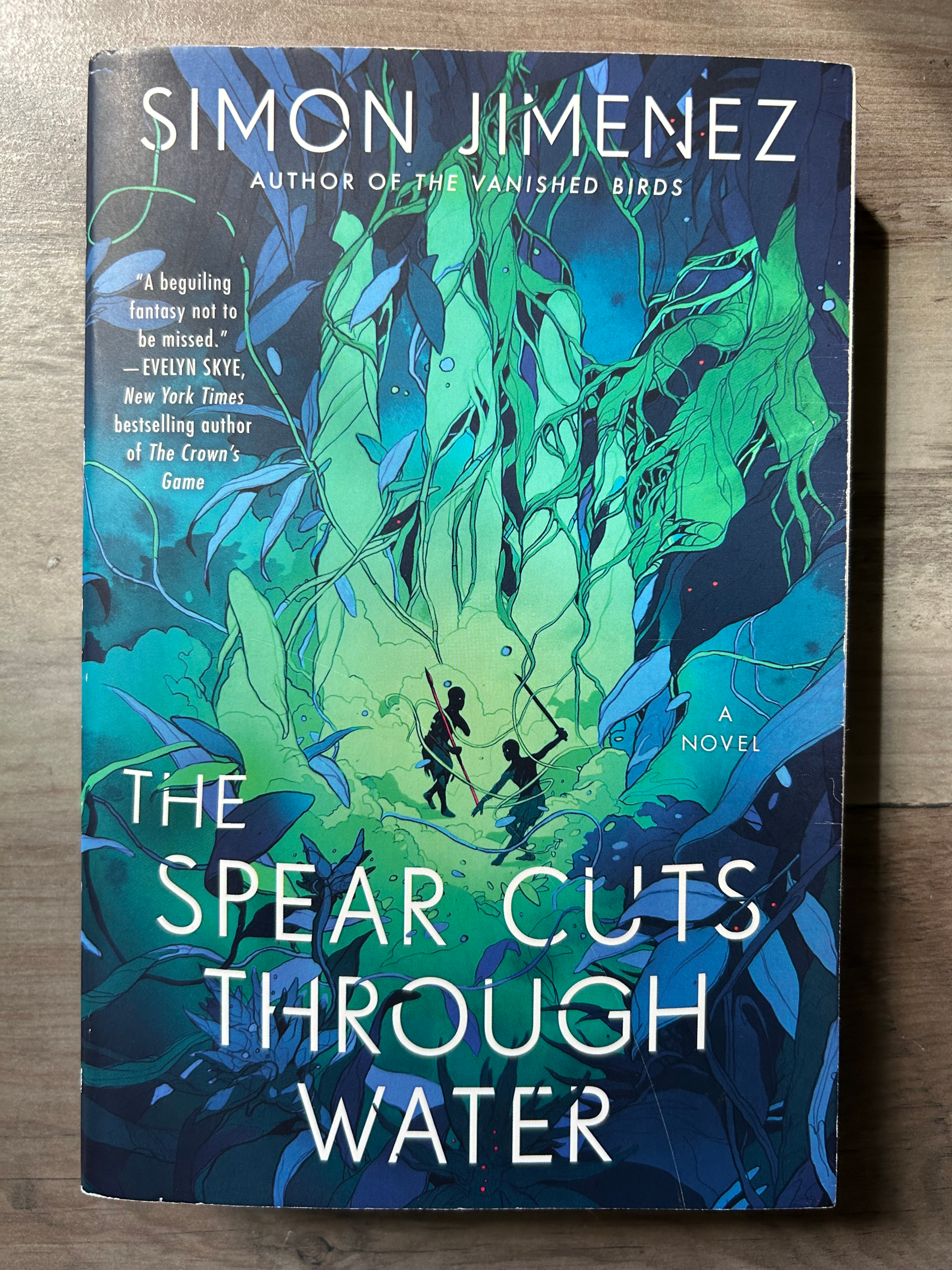
I actually picked up this book many months ago and immediately dropped it. A few weeks ago, I decided to give it another try. I am so happy that I completed it, as this story has come to be unforgettable.
“And the longer I live, the more it surprises me, and saddens me, how wise the young must be to live in this world.”
Premise of the book:
You are in an ‘Inverted Theater’, watching a legend unfold about two exiles, one a guilt-ridden guard (Jun) and the other an outcast with one arm (Keema), as they free the Moon God from royal captivity. They are on a five-day journey to deliver the god to her desired location in hopes that it will free their lands from the tyrannical royal sons, also known as the Three Terrors. With the Three Terrors after them, the two boys must learn to work with one another to be able to liberate everyone.
“You can fault the dancer, but more often than not, it is the dance itself that has to change.”
Pros/positives:
*Writing style*
I found the writing style used in this book to be captivating. Each paragraph creates beautiful imagery and grows the tale into what feels like a real world.
The most noticeable component of this book was the POV changes throughout it. It ended up being one of my favorite parts of the story, as it made this novel more unique. There are some pieces from every perspective (first-person, second-person, and third-person), with each perspective representing a different character. In the second-person narrative, you are looking through the eyes of a grandchild as she goes through her life. It was an amazing way to show the oral process of passing down a myth within a family. In the third person, you are following the two outcasts, Jun and Keema, as they escort the Moon God to her desired location. In the first-person perspective, you are usually the god, but sometimes you are also a minor, unnamed side character. The story occasionally gives you their brief thoughts.
My favorite chapter was the one where we get to be in the mind of one of the Terrors. It gave the reader thoughts both from the oppressed and the oppressor. The POV changes flowed in and out of one another, and each change was intentional and well thought out.
Outside of the POV changes, the formatting of this book was also exceptional. The author paid attention to the text format greatly, using italicizing and bolding in a thoughtful way. The author also chose to center some of the text throughout the book, which added emphasis to certain impactful sentences.
*Plot*
While the writing style was a heavy component in making this book stand out, the plot is yet another star.
When buying the book, I thought we would follow two boys saving their world from horrible rulers. However, as I started reading, I realized that it was much more than that. You aren’t directly following the boys, but observing them through a play in a magical theater through the eyes of a second-person narrator. Knowing that you are watching the story unfold connects to how the narration feels like a performance. You switch from the two boys’ adventure to your very own life. Both tales taught the reader different life lessons.
The 5-day journey that Jun and Keema take moves at a good enough pace to keep me from actually complaining (though I found some parts slightly slower than others). Yet, the mini pacing issue didn’t grab my attention; the expedition did. The story wasn’t meant to be a high-action adventure with endless battles. Instead, it was meant for more of a trek, teaching the readers how to break the cycle of violence.
The other tale of your own life brings the readers through the more modern day. It was a sort of anchor between the myth being told to us and the actuality of what is happening in the world. It shows the parallels and differences between what Jun and Keema are going through versus what you have to face. In other words, it compares world-ending, god-level threats to the struggles that some people face every day, illustrating how some people’s hardships can feel just as devastating.
*World-building*
You could see the amount of thought put into the setting, and it only gets better as you continue reading.
The author paid attention to the small details, the ones that made this world seem more alive and lived in. For example, the use of masks that represent animal faces was a small detail that stood out to me. Each person in the royal court had a mask with an animal that depicted them. The First Terror’s children have red peacock masks, while one of the servants had a gecko mask. While it is never mentioned outright, it adds to the feel of the world.
The world also uses tortoises for communication, with all of them connecting to each other. It gave an additional challenge for Jun and Keema as they had to be careful around these creatures, while also trying to use the tortoises’ gift to their advantage.
*Characters and their relationship development*
I found all of the characters in this story to be appealing.
The POV switches in this novel allowed me to grow closer to the different characters, especially Jun and Keema. It allowed me to see their separate struggles and thoughts. Jun has a bigger problem with his guilt and remorse for his past actions, while Keema faced more discrimination against people for having one arm. We even got to see the issues that some of the Three Terrors face, which gave the readers a quick chance to almost sympathize with them.
I loved the growth that the two main characters had in relation to one another. They started out hating each other and just barely being able to work together, to having a close, unbreakable bond. Even seeing the connection between the Moon God and Jun was interesting, as there was a huge power dynamic between them, which shifted their relationship multiple times as I read.
The villains themselves were extraordinary in terms of their abilities and personalities. They each had distinct thoughts from one another, helping me not accidentally switch them. Even if their powers weren’t unique, the way it was used and introduced to the reader in the book is what made it memorable for me.
“They fought because it was the easiest language they spoke.”
Cons/negatives:
*Chapters (or lack there of)*
This book is divided into sections rather than chapters. Out of the 518 pages, there are 7 sections, and each has some breaks in it. The sections are based on what day it was. Within each one, there is a break for mornings, afternoons, evenings, etc. I tend to love it when there are short chapters, since I found that occasionally in this novel, I couldn’t find a good stopping point.
*Individual character development*
Even though the relationship between the characters had a lot of growth throughout the story, individual journeys were less…plentiful. I can’t say that there wasn’t development in Jun and Keema by the end of the novel, but I feel like the development wasn’t spread over time.
The main culprit of this is Jun. Don’t get me wrong, I love his character, but all of the mental healing that he had from his past actions was done at the epilogue. I find it more rewarding when the problem is handled throughout the book and is resolved at the end. The mental issues Jun had were mentioned from the beginning to the end, but were only tackled in the last few pages.
*Could be confusing at times*
The first time I tried reading this book, I dropped it pretty quickly, as I was not only confused, but it didn’t feel like the right moment for me to start.
The opening POV being second-person puzzled me for the first few pages, as I was trying to figure out who the character was. The summary in the back of the book mentioned nothing other than God, Jun, and Keema, so I was trying to guess who I was from that. Turns out, it was its own character all along.
I also found out that I needed total focus when reading the book. Any background noise would sometimes make me have to reread a passage, while other times I was too tired to actually comprehend what was happening.
“If only there were a way to hold a moment in your hands and keep it alive forever.”
Conclusion:
Pros – Writing style, plot, worldbuilding, characters and their relationship development.
Cons – Chapters (or lack there of), individual character development, was slightly confusing at times.
Overall – 4.35 out of 5
“Blame is an endless circle.